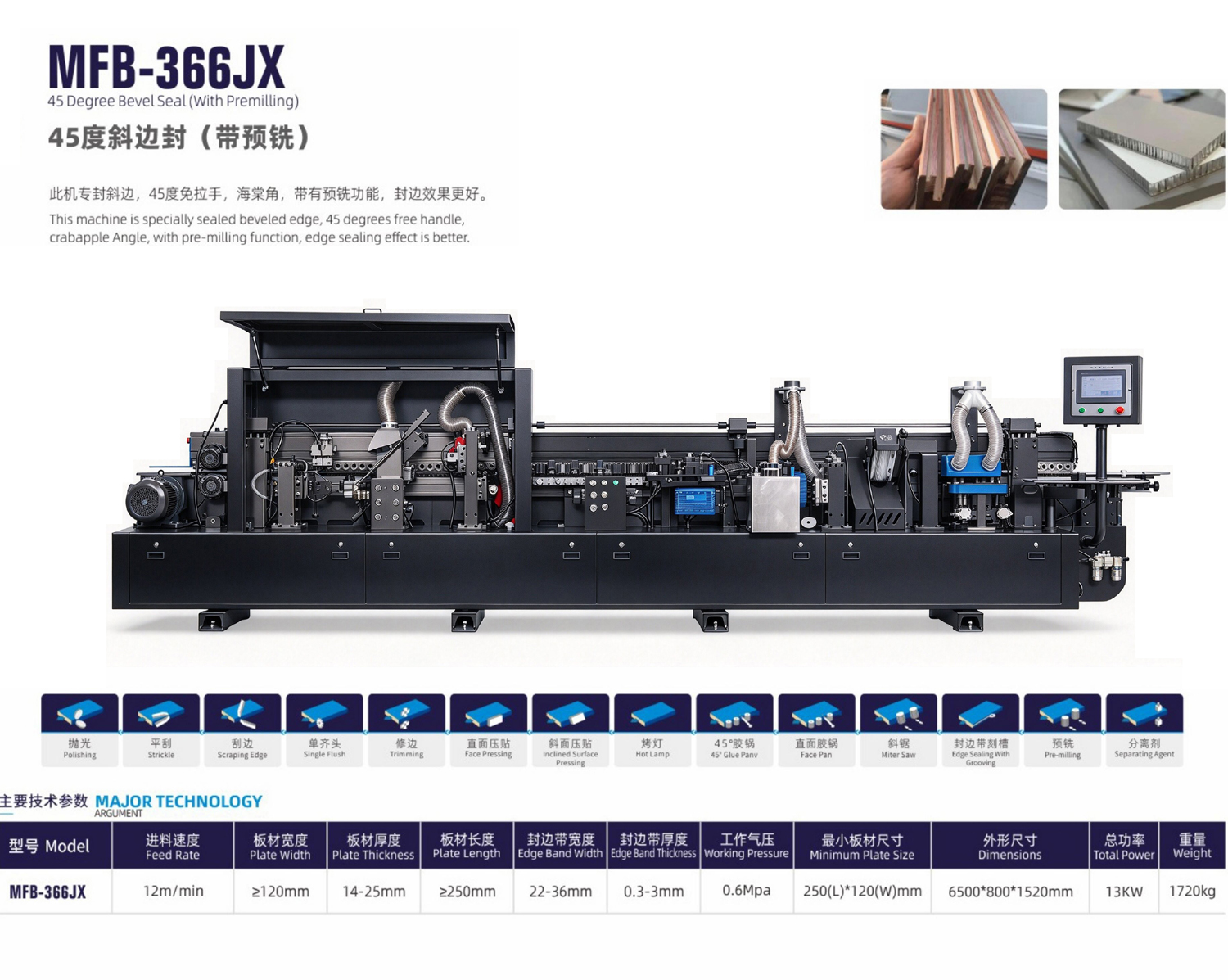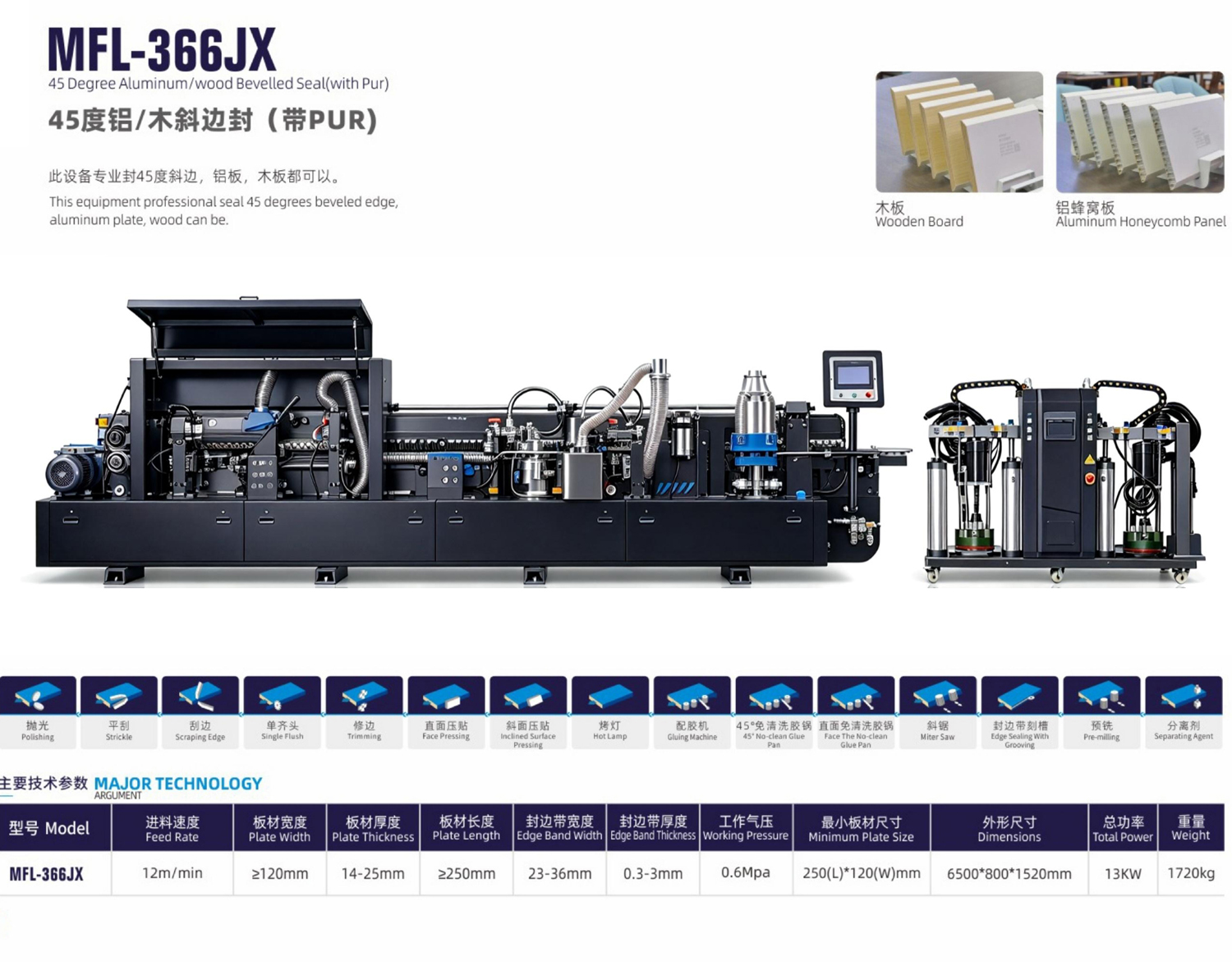





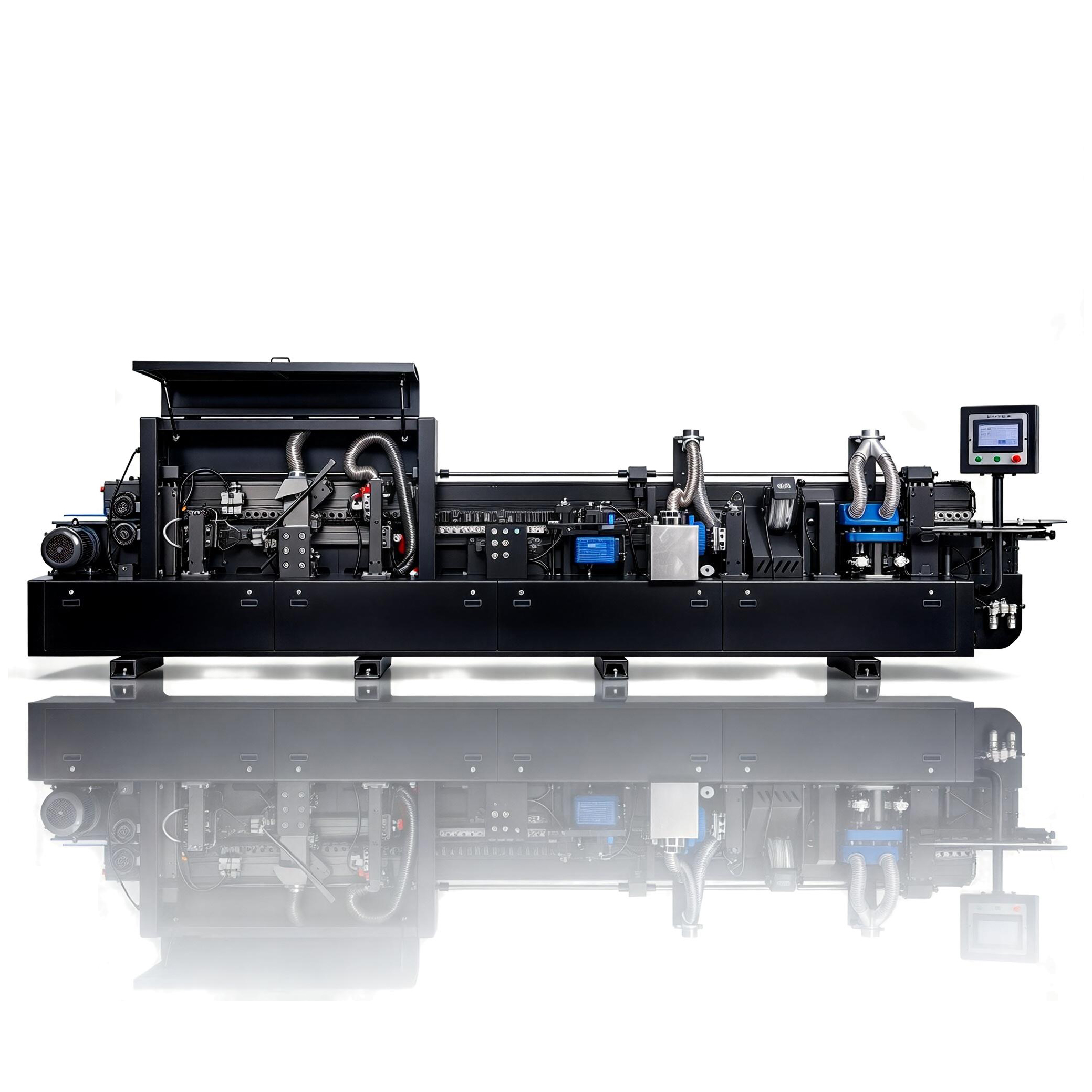
MFB-366JX (45 degree bevelled series)
1-Current and voltage display;
2-Edge-sealing tape pre-feed function
3-Variable-frequency drive fault code display
4-Intelligent variable-frequency drive monitoring
Beveled edge with a flat surface; height can be adjusted according to the dimensions of the inclined surface.
Apply adhesive to the inclined and flat surfaces of the wooden board, ensuring uniform coverage. The adhesive pot for the inclined surface can be adjusted in position according to the height of the board surface.
Diagonal pressure bonding and flat-pressure bonding ensure tight contact between the edge banding and the side of the panel. The iron pressure roller incorporates a built-in adhesive scraper function
Extend the edge banding upward and downward beyond the wooden board; trim any excess edge banding on the upper and lower surfaces into an R-shaped profile, so that the upper and lower edges of the edge banding are flush with and smooth against the upper and lower surfaces of the wooden board.
Rapidly sever the front and rear edge bands; position the two saw blades in front and rear alignment to achieve high precision and high efficiency.
Shape the edges using a curved motion for a smooth finish; depending on the thickness of the edge banding, flexibly employ two sets of edge-scraping blades with different curvature settings for scraping. This complements edge trimming and polishing, resulting in a flawless edge finish.
Correct the excess adhesive on the board surface and the knife marks along the edges, thereby making the edges of the board surface smoother and more even.
Remove excess adhesive residue to make the edge seal smoother and more aesthetically pleasing.